Zeolite molecular sieves have emerged as high-performance thermal stabilizers for the plastics industry in recent years, with wide applications in polyvinyl chloride (PVC), polypropylene (PP) and other polymer materials. These functional materials effectively suppress polymer degradation, boost thermal stability, and prolong the service life of plastic products.
Zeolite Stabilizers For PVC Materials
PVC features inherent heat sensitivity and weak thermal stability, so it easily undergoes degradation under high-temperature conditions. For this reason, manufacturers apply thermal stabilizers to stop PVC from decomposing, discoloring, and losing mechanical properties during processing and service.
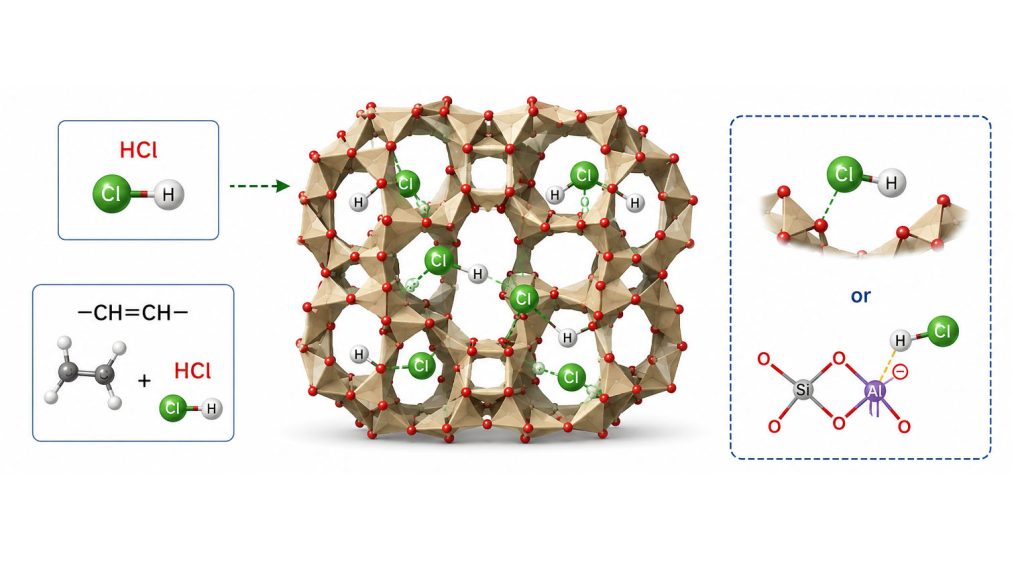
PVC generates hydrogen chloride (HCl) gas under thermal conditions, and this acidic gas acts as the direct trigger for PVC’s color darkening and performance deterioration. Therefore, thermal stabilizers primarily neutralize free HCl molecules and block continuous chain degradation reactions in PVC matrices.
Zeolite molecular sieves possess excellent HCl adsorption capacity. They also deliver synergistic effects when combined with calcium-based or zinc-based stabilizers, significantly improving the overall thermal stability of PVC. This composite application effectively solves PVC’s initial discoloration defects and long-term aging issues.
Zeolite Molecular Sieve Types For PVC Stabilizers
Multiple zeolite types work for PVC thermal stabilization, including A-type, P-type, X-type and Y-type zeolites. Among these variants, A-type molecular sieves (represented by 4A zeolite powder) stand out for their superior comprehensive performance and cost advantages, making them the most practical option for industrial use.
- 3A Zeolite Molecular Sieve
3A molecular sieve mainly serves as a desiccant to eliminate moisture in PVC systems. And it also captures free trace acids generated by oxidative degradation in PP systems, delivering auxiliary acid-scavenging effects.
- 4A Zeolite Molecular Sieve
As a core functional additive for PVC stabilizer systems, 4A molecular sieve adsorbs tiny HCl molecules released by heated PVC. This inhibits thermal degradation reactions and alleviates PVC discoloration caused by high-temperature exposure.
- 5A Zeolite Molecular Sieve
5A molecular sieve traps HCl gas and impurity molecules produced during PVC thermal processing. It mainly enhances the adsorption efficiency and high-temperature resistance of PVC stabilizer systems.
- 13X Zeolite Molecular Sieve
Type 13X molecular sieve boasts a larger adsorption volume than conventional zeolites and can capture various acidic gases such as hydrogen chloride and sulfur dioxide. 13X molecular sieve mostly applies to special PVC additive formulas or acts as a carrier for composite thermal stabilizers.