Zeolite molecular sieves feature uniform pores and excellent adsorption, hence being widely employed for selective separation of linear and branched paraffins. Linear and branched paraffins serve distinct functions and hold different economic value in petrochemical production and downstream fine chemical processing. Separating these two paraffin types greatly boosts industrial utilization efficiency and creates greater economic benefits.
Significance Of Separating Linear And Branched Paraffins
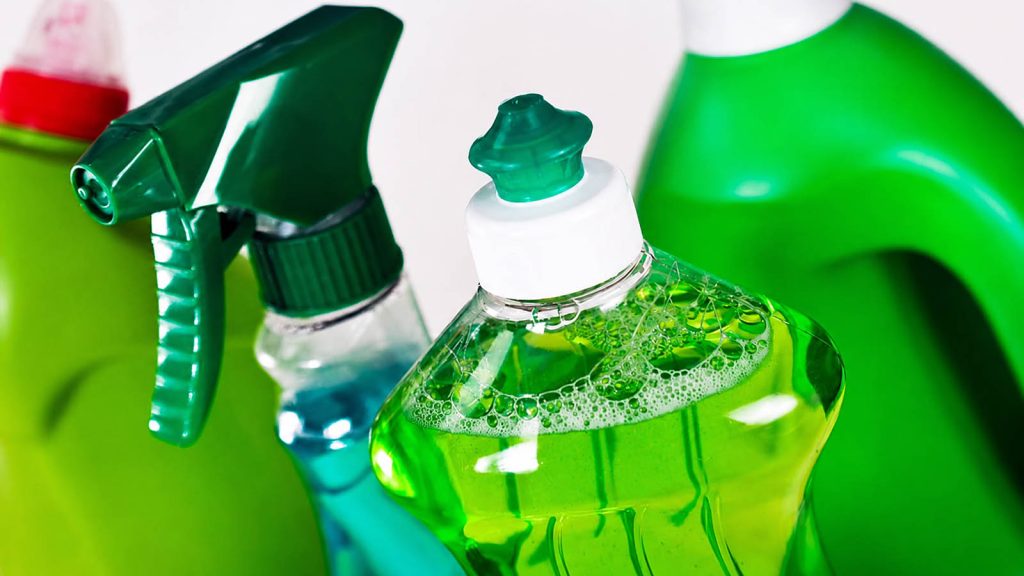
Linear paraffins (also known as normal alkanes or n-paraffins) and branched paraffins (also called isomeric alkanes or i-paraffins) act as core raw materials across the petrochemical industry. Their effective separation lays a solid foundation for manufacturing high-quality fuels and premium chemical feedstocks. For instance, it helps improve fuel quality, make biodegradable detergents and surfactants, and produce lubricants, paraffin waxes, etc.
- Linear paraffins feature relatively high boiling points and low octane ratings, which correspond to weak anti-knock performance. They are more suitable as chemical raw materials, such as cracking to produce ethylene and propylene, synthesizing surfactants, preparing normal alkane solvents and specialty chemicals, etc.
- Branched paraffins possess low boiling points, high octane ratings, and thorough combustion characteristics. They are more suitable as fuel components, such as gasoline blending to elevate octane values, function as key components of aviation fuel and other clean fuel, etc.
Principles And Methods For Paraffins Separation
Molecular diameter differences create the core basis for separating linear and branched paraffins. Linear paraffin molecules have a critical diameter of 4.9 angstroms, while all branched paraffin molecules exceed 5 angstroms in diameter. Industry utilizes the steric exclusion effect of 5A zeolite molecular sieves to achieve efficient separation based on this size discrepancy.
Linear paraffins such as n-butane and n-hexane have straight, compact molecular structures with small overall dimensions. These molecules can freely penetrate the pore channels of 5A molecular sieves. In contrast, branched paraffins including isobutane and isohexane have branched molecular frameworks that bring larger molecular volume and irregular spatial shapes. These structural features prevent branched paraffin molecules from entering 5A molecular sieve pores.
During the separation process, 5A molecular sieves adsorb linear paraffins that enter their pore structures. Branched paraffins remain in the original gas or liquid phase as they cannot access the sieve pores. This straightforward steric adsorption mechanism completely separates linear paraffins from branched counterparts.
Molecular Sieves For Linear And Branched Paraffins Separation
Obviously, type 5A zeolite molecular sieves serve as the optimal medium for linear and branched paraffins separation, with a precise pore size of approximately 5 angstroms. The large molecular size and high steric hindrance of branched paraffins block their entry into the molecular sieve pores, so 5A molecular sieves do not adsorb branched paraffins at all.
The application of 5A zeolite molecular sieves in paraffin separation produces high-purity linear paraffin feedstocks, such as n-pentane and n-hexane. Meanwhile, this separation technology effectively improves the overall selectivity of the paraffin isomerization process.